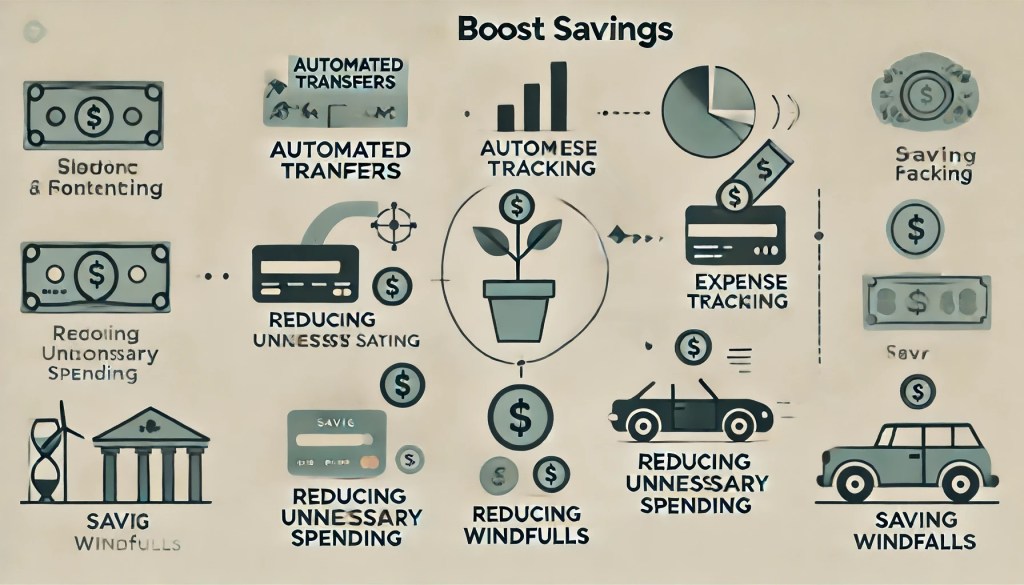
Saving money is a fundamental aspect of financial health. This blog post provides actionable steps to help you save more effectively and build a robust financial cushion.
Effective saving habits can provide financial security, reduce stress, and help you achieve your long-term goals. Here are practical steps you can take to boost your savings and create a strong financial foundation.
1. Set Clear Savings Goals
- Actionable Step: Define specific, measurable, achievable, relevant, and time-bound (SMART) savings goals. For example, aim to save $5,000 for an emergency fund within 12 months.
- Example: “I will save $200 from each paycheck to build my emergency fund of $5,000 within the next year.”
2. Automate Your Savings
- Actionable Step: Set up automatic transfers from your checking account to a dedicated savings account. Schedule these transfers to coincide with your payday.
- Example: “I will set up an automatic transfer of $200 to my savings account on the 1st and 15th of every month.”
3. Track Your Expenses
- Actionable Step: Use a budgeting app to monitor your spending and identify areas where you can cut back. Categorize your expenses and review them monthly.
- Example: “I will use the Mint app to track my expenses and review my spending categories every month to find potential savings.”
4. Reduce Unnecessary Spending
- Actionable Step: Identify non-essential expenses that you can reduce or eliminate. This could include dining out, subscription services, or impulse purchases.
- Example: “I will limit dining out to once a week and cancel unused subscription services, saving an estimated $150 per month.”
5. Use Cashback and Reward Programs
- Actionable Step: Sign up for cashback apps and use credit cards that offer rewards on your purchases. Apply the cashback and rewards towards your savings.
- Example: “I will use the Rakuten app for online shopping and a cashback credit card for groceries, redirecting the rewards to my savings account.”
6. Review and Adjust Your Budget Regularly
- Actionable Step: Schedule a monthly review of your budget to track your progress and make adjustments as needed. Ensure that you are staying on track with your savings goals.
- Example: “I will review my budget on the last Sunday of every month to adjust my spending and savings plans accordingly.”
7. Take Advantage of Employer Benefits
- Actionable Step: Maximize your use of employer-sponsored retirement plans and health savings accounts (HSAs) to save on taxes and build long-term savings.
- Example: “I will contribute enough to my 401(k) to receive the full employer match and regularly contribute to my HSA for medical expenses.”
8. Save Windfalls and Bonuses
- Actionable Step: Deposit any unexpected income, such as tax refunds, bonuses, or monetary gifts, directly into your savings account.
- Example: “I will deposit my annual tax refund and any work bonuses directly into my savings account to boost my emergency fund.”
Building a robust savings habit requires clear goals, consistent tracking, and regular adjustments. By setting specific savings goals, automating your savings, tracking expenses, reducing unnecessary spending, using cashback programs, reviewing your budget regularly, taking advantage of employer benefits, and saving windfalls, you can significantly boost your savings and achieve financial stability. Start implementing these steps today and watch your savings grow.
 Savvy Finance hub
Leave a comment